
Compensation Policy: Framework, Template & Real-Time Market Alignment
A compensation policy represents the operational backbone of employee remuneration: the documented framework that transforms your organization’s pay philosoph...
Salary benchmarking guides, tool comparisons, and compensation strategies for HR and compensation professionals
Showing page 11 of 13 (12 articles)
A compensation policy represents the operational backbone of employee remuneration: the documented framework that transforms your organization’s pay philosoph...

Software engineer total compensation refers to the complete economic value an employer provides to a software engineer over a defined period, typically annual...

Sales compensation consulting helps organizations design, assess, and optimize pay structures for sales teams to align financial incentives with business obj...
A practical guide for HR leaders evaluating compensation consulting firms. Covers when to hire a consultant vs. use software, types of engagements, evaluation criteria, what good engagements look like, and red flags to avoid.

Executive compensation benchmarking is the systematic process of comparing your organization’s executive pay structures against market data from comparable c...

A salary budget survey provides HR and compensation teams with aggregated data on what employers plan to spend on salary increases, helping organizations ben...
Custom salary surveys give HR and compensation teams the precise market data they need when standard sources fall short. This article covers how to design, e...
A practical guide for healthcare HR and compensation teams on using compensation survey data effectively. Covers clinical vs non-clinical benchmarking, shift differentials, geographic variation, key data sources, and regulatory context.
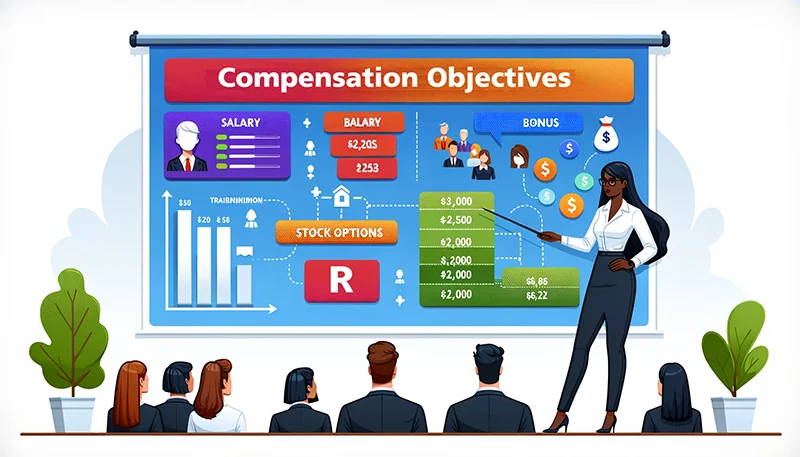
Compensation objectives are the explicit, measurable goals that guide every decision an organization makes about pay, from base salary structures to variable ...
Compensation principles define how your organization positions pay relative to market data. Learn how to establish a lead, match, or lag philosophy, align it to business strategy, document it for stakeholders, and review it annually.

Compensation and rewards are distinct but connected levers that modern HR teams use to build comprehensive total rewards strategies for U.S.-based organizati...
Long-term incentives (LTI) are compensation awards that reward employees for sustained performance and service over multi-year periods, typically three to fi...