
Skill-Based Pay: How to Build Fair, Future-Ready Compensation Structures
Skill-based pay is a compensation model that ties employee pay directly to the skills and competencies they have demonstrated, rather than to job title, tenu...
Salary benchmarking guides, tool comparisons, and compensation strategies for HR and compensation professionals
Showing page 9 of 13 (12 articles)
Skill-based pay is a compensation model that ties employee pay directly to the skills and competencies they have demonstrated, rather than to job title, tenu...

This guide provides HR and compensation professionals with a comprehensive compensation policy template, including best practices and sample language. Whethe...
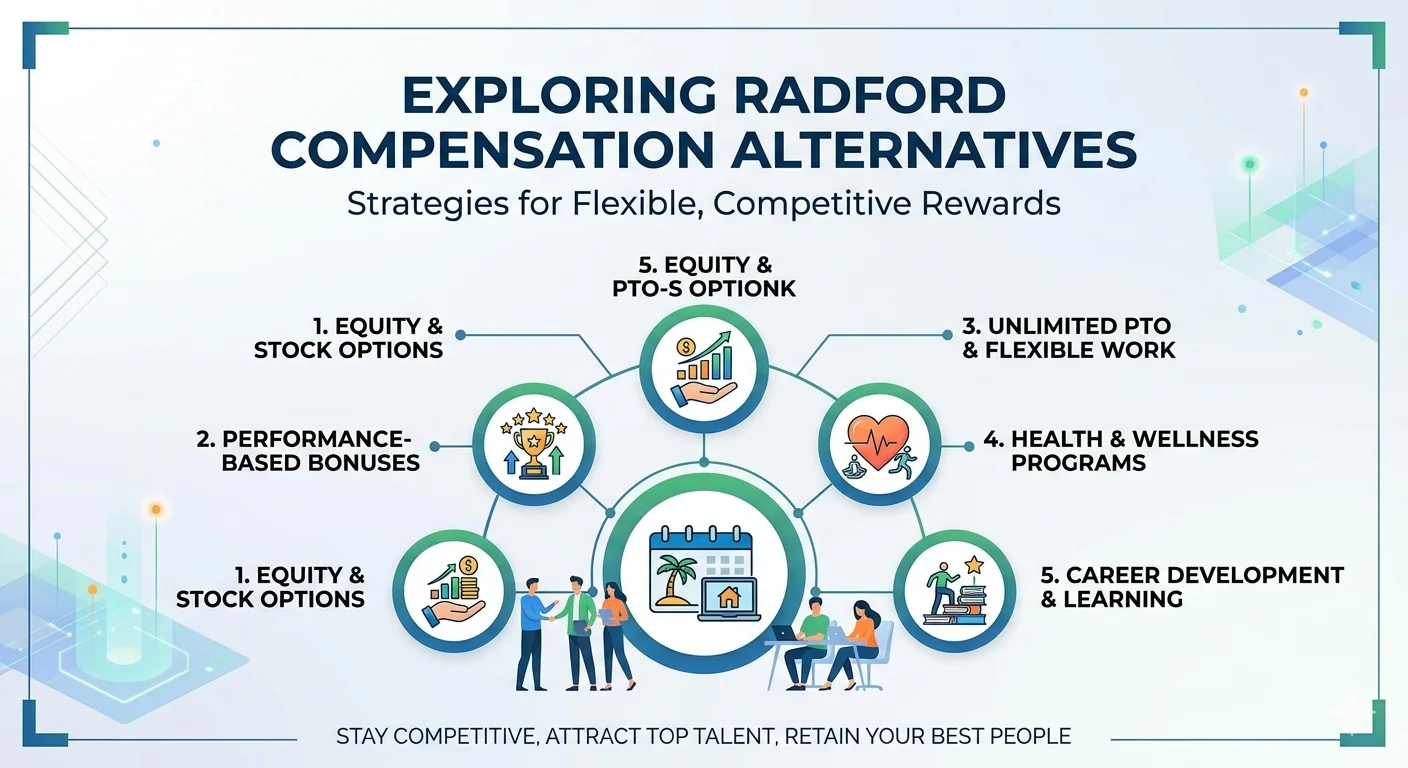
Compare 11 Radford alternatives with pros, cons, and pricing. From SalaryCube and Mercer to Payscale and Pave, find the right benchmarking fit.
A total compensation statement builder is specialized software that enables HR and compensation teams to automate the creation, customization, and distributi...

What does a chief people officer do? The Chief People Officer (CPO) is the executive leader who owns people strategy, company culture, and the full employee ...

“I’m looking for a job that offers competitive compensation and benefits.” This phrase, or some close variant, is what candidates type into search engines, sha...

A competitive pay policy defines how your organization positions pay relative to the market. Learn the components, build process, governance model, and annual review cycle HR and compensation teams need.

A market competitive pay system aligns your compensation to external labor market data. Learn how to build one using real-time data sources, job matching, pay ranges, and ongoing governance. Written for HR and compensation professionals.

An uncompetitive salary quietly erodes your ability to attract qualified candidates, retain good employees, and maintain a defensible compensation strategy. ...

A step-by-step salary increase policy framework covering eligibility rules, merit matrices, promotion increases, FLSA compliance, budget allocation, and governance. Built for HR and compensation professionals at mid-market organizations.

Competency-based pay ties compensation to demonstrated skills rather than job title or tenure. Learn when it works, how to design competency pay structures grounded in market data, and the implementation challenges comp teams should plan for.

This article is designed for HR professionals, compensation managers, and finance leaders in the United States who are responsible for shaping compensation s...